Get involved
Our founders do not need to be discovered. They need the things displacement took away: a network that vouches for them, capital that will price them fairly, and a room where their idea gets taken seriously.
Three ways to supply one of those.
Mentor a founder against a specific problem, lead a workshop, or take office hours during an accelerator week. The most useful hour you can give is a narrow one.
Fund the investment pool graduating founders pitch into, sponsor a named prize at demo day, or co-invest alongside us in a company you believe in.
Host a city week, send your faculty, or fund a cohort. Antler, Rutgers and Schmidt Futures each did one of these, and the program exists because they did.
01 · Offer founder support
Open-ended offers of help tend to die in a calendar. We match against a stated problem — a term sheet to read, a supply chain to price, a market to size — so you know before you say yes exactly what is being asked.
Matched to a founder against a specific need for a defined engagement, not an open-ended introduction. Most run a handful of sessions across a cohort.
Teach one of the six bootcamp modules, or a session during an in-person week in New York City, Washington DC, Toronto or Berlin. Bring your own material.
A block of short back-to-back sessions during an accelerator week. High volume, low commitment, and consistently the thing founders rate highest.
Sit on the panel founders pitch to at the end of the program, and give the kind of direct feedback a first-time founder rarely gets from an investor.
Incorporation, immigration, IP, accounting, banking. For a founder without a credit history or a local network, this is often the binding constraint.
02 · Invest
Every founder here has already been selected twice and spent six months testing the idea in front of real customers. The gap is not diligence. It is that no institutional investor writes a first check to someone with no credit history in the country they are building in.
The capital graduating founders pitch into — equity investments and grants of up to $100,000, decided at the end of each cohort. We are a non-profit fund; proceeds are recycled into the next cohort rather than distributed.
Name and fund a prize awarded at graduation — a sector prize, a city prize, a prize in someone's memory. Structure, amounts and how winners are chosen are being worked out now.
Co-invest alongside VBB in a graduating company, pooled with other backers so individual checks can be small. Vehicle and terms to be defined.
03 · Run a program with us
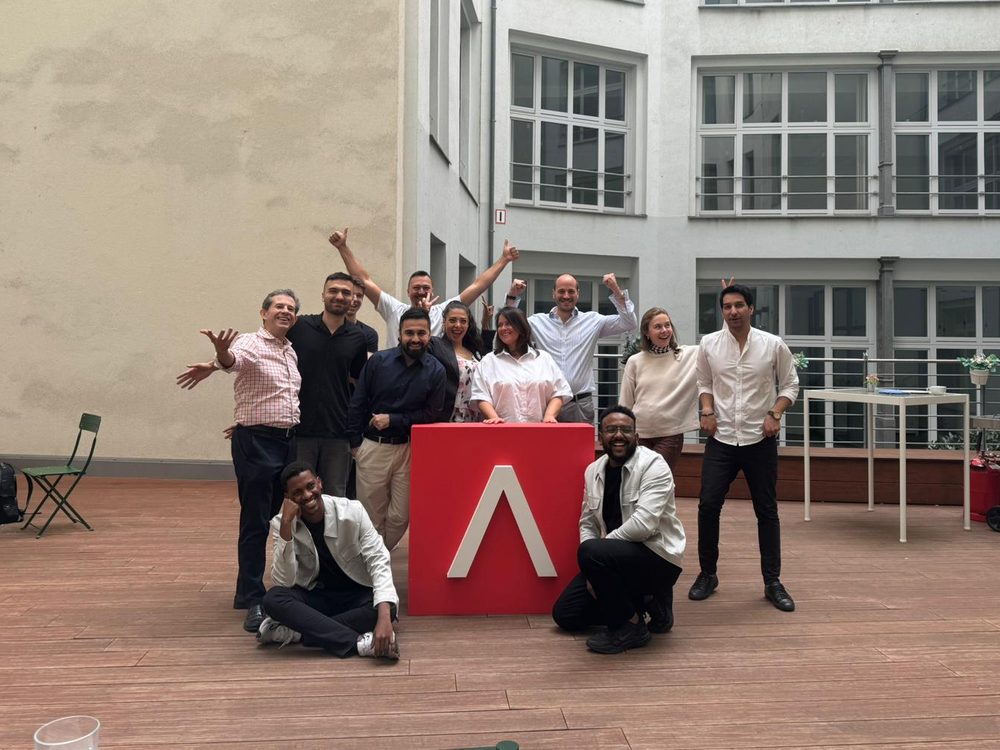
The 2023 pilot ran with Antler and Schmidt Futures. Berlin's accelerator week was hosted in Antler's office. The faculty teaching value propositions came from Rutgers. None of that was philanthropy in the abstract — each was one concrete thing an organization already had.
Space, and the gravity that comes with an address founders want to be at. A week of rooms is worth more to a cohort than most cash gifts of the same value.
Business schools have the curriculum and the teaching capacity already built. We have a hundred founders who cannot pay tuition for it.
Underwrite a full cycle — bootcamp through graduation — in a city or for a displaced population your organization already works with.
Customers, distribution or a first contract for a portfolio company. For an early business this is worth more than the investment.
Most of our partnerships started as a conversation with someone who was not certain what they had to offer. Tell us what you do and we will tell you what would help.